Currently reading: The Ravenhood Series

I write about monsters and the people who survive them. I spend my days crafting psychological thrillers where broken characters face their worst nightmares. So when I tell you I just devoured Kate Stewart’s Exodus (book two of the Ravenhood Series), you might wonder what the hell happened to me.

Here’s the thing: I’ve been completely enthralled by Cecelia’s romantic chaos, and I’m not even sorry about it.

The Setup (Or How BookTok Made Me Cautious)

I tore through the first book, Flock, in a matter of days. Couldn’t put it down. But then I made the mistake of scrolling through BookTok reviews of Exodus and saw readers literally crying over their phones. Multiple people warned about emotional devastation ahead.

So I did what any reasonable person would do: I slowed down. Because sometimes you need to prepare for heartbreak, even the fictional kind.

What Kate Stewart Gets Right

Stewart knows her audience, and she knows how to play us like instruments. Take this line:

“He wants me to read, with him, in his bed. And what better way to pass a day in stormy weather than curling up with a gorgeous man and getting lost in the words.”

Come on. We all wanted to read in bed with Dominic and spend lazy days in the sun with Sean. She created these moments that feel like the kind of intimacy that makes you forget you’re holding a book.

The character development has been stellar. Stewart doesn’t dump exposition on you like a truck. Instead, she parcels out backstory when it matters, when it hits hardest. You learn about these characters the way you’d learn about real people—through their actions, their silences, the way they touch or don’t touch.

And yes, the spice is excellent, especially in book one. But it’s not just heat for heat’s sake. Every intimate moment reveals something about who these people are and what they want from each other.

Why This Horror Writer Needs Romance

You might wonder why someone who writes about trauma and survival would gravitate toward love stories. Here’s what I’ve figured out: both genres are about transformation. Both ask what happens when someone’s carefully constructed world gets turned upside down.

In horror, that transformation often comes through surviving something terrible. In romance, it comes through letting someone past your defenses. Different catalysts, same fundamental question: what happens when you can’t stay the same?

Cecelia isn’t just choosing between men (though that choice is delicious torture). She’s choosing between versions of herself. The woman who plays it safe versus the one who takes risks. The one who follows rules versus the one who writes her own.

Sound familiar? It’s the same choice my thriller protagonists face, just with better lighting and considerably more sexual tension.

The Beautiful Devastation

Stewart understands something crucial about storytelling, something she captures in this quote from the book:

“My favorite books, love songs, movies, the ones that resonated with me, have kept me grieving long after I turned the last page, the notes faded out, or the credits rolled.”

The best stories don’t let you go. They change you. They make you feel things so intensely that you carry the emotional residue for days, weeks, sometimes years afterward. Whether that feeling comes from watching someone survive a monster or watching someone fall in love doesn’t matter. What matters is that it leaves a mark.

The Verdict (And My Dilemma)

Exodus delivered on its promises. The emotional stakes are real, the character growth is satisfying, and yes, those BookTok reviewers were right about the tears. Stewart crafted something beautiful and brutal, the kind of story that makes you understand why people get addicted to romance.

But I’m not sure I’ll continue to book three.

Not because the writing isn’t good (it’s excellent). Not because I don’t care about Cecelia’s journey (I’m invested). But because sometimes you know a story is going to wreck you, and you have to decide if you’re ready for that particular devastation. Maybe that’s the real difference between horror and romance. In horror, you expect the pain. You sign up for it. In romance, the pain sneaks up on you, wrapped in all that hope and beauty and the promise of happily ever after. It hits different when you’re not braced for impact.

For Fellow Genre-Jumpers

If you’re like me—if you usually live in darker fictional territories but find yourself curious about the romance buzz—the Ravenhood series is a good entry point. Stewart respects her characters’ complexity. She doesn’t shy away from difficult emotions or messy situations. She understands that the best love stories aren’t about perfect people finding each other; they’re about damaged people choosing to heal together.

And if you’re worried about the emotional aftermath, well, maybe that’s part of the point. The stories that stay with us are the ones that risk everything, including our carefully guarded hearts.

Just maybe keep some tissues handy. BookTok wasn’t lying about those tears.

Have you made any surprising genre jumps lately? What stories have caught you off guard and refused to let go? I’d love to hear about the books that made you feel too much in the best possible way.
Why I Write Horror: Celebrating Resilience and Hope

It began with a book. Dean Koontz’s Watchers in sixth grade, pages turning like doors opening into rooms I’d never seen before. One story, and my world shifted. I moved from Sweet Valley High books to the macabre and challenging: Stephen King’s Maine shadows, more Koontz creatures prowling suburban streets, Grisham’s courtroom battles, Woods’ conspiracies, Brown’s ancient secrets. Each book a key to darker territories where ordinary souls collide with extraordinary malice.

But here’s the secret I discovered in those midnight reading hours: I don’t write horror and thrillers for the monsters lurking in the margins. I write them for the ones who walk away from the wreckage, scarred but breathing. I celebrate the victims.

I Believe in Monsters

I believe in monsters. They wear human faces. They sit beside you on buses, smile at checkout counters, coach little league teams. Monsters exist in the space between heartbeats, in the pause before the storm breaks. Most carry no fangs or claws, just the terrible knowledge of where to press to make someone break.

What draws me isn’t their darkness but the moment when someone looks into that abyss and refuses to blink. My protagonists aren’t heroes polished bright. They’re survivors forged in crucibles of childhood pain, shaped by hands that should have protected but chose destruction instead. Their scars tell stories of adaptation, of learning to breathe in spaces where oxygen runs thin.

These experiences carved them hollow in places, filled them with steel in others. They know the geography of cruelty because they’ve walked those territories barefoot. That knowledge becomes their compass when new shadows gather.

But healing demands distance. My characters build sanctuaries on the edges of civilization, in cabins tucked between mountains, in apartments where neighbors remain strangers. They plant gardens in the quiet spaces they’ve claimed, learn to sleep without checking locks twice, discover peace tastes like morning coffee without fear seasoning every sip.

Then the darkness finds them again.

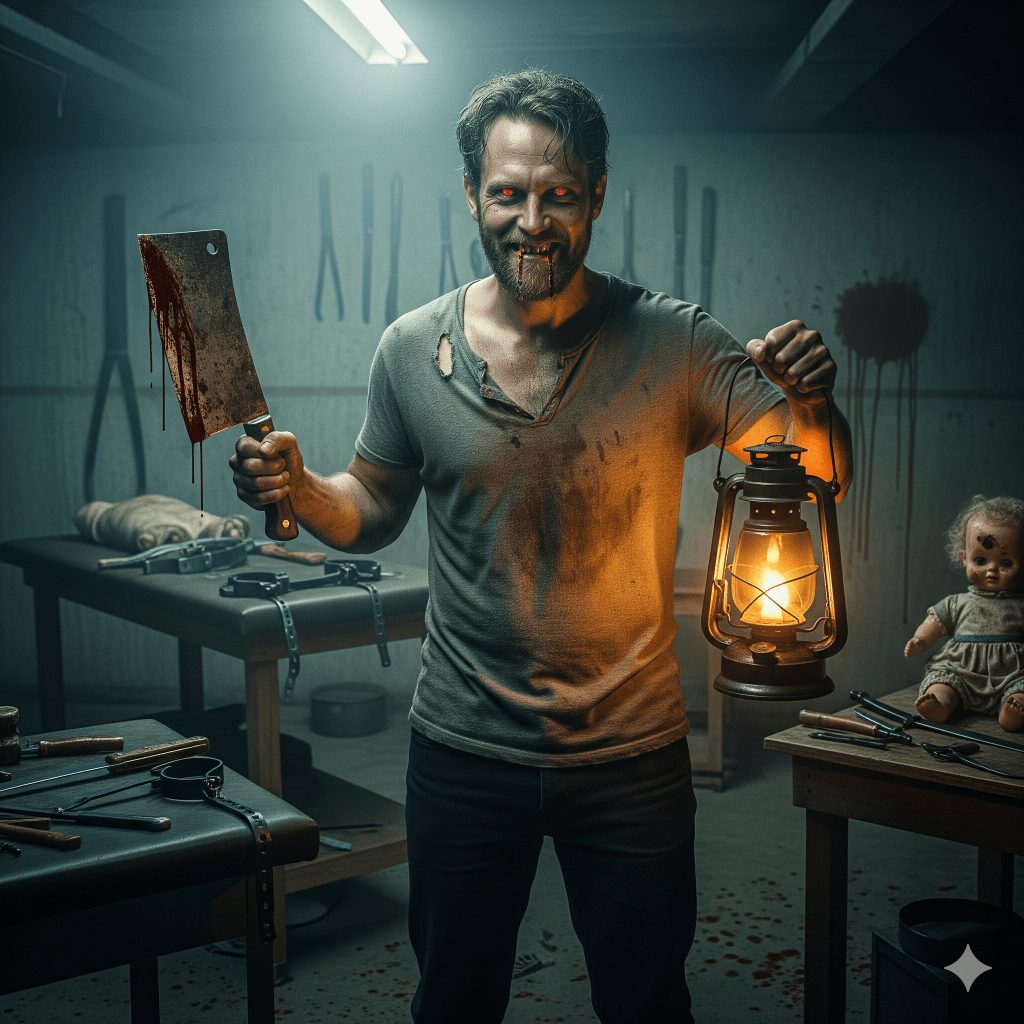
Quintessential horror movie human antagonist as imagined by Google Gemini

The Predator’s Mistake

There’s poetry in the predator’s error. They scan crowds for familiar wounds, recognize the careful way survivors move through rooms (backs to walls, eyes mapping exits), mistake hard-won wisdom for weakness. They see someone who’s learned to make themselves small and assume the fire has died.

What they miss is the difference between hiding and healing, between broken and rebuilt. They threaten not just life but the cathedral of calm their target has spent years constructing. Every quiet morning, every peaceful evening, every moment of safety becomes a hostage.

The predator believes they’ve found easy prey. They’ve chosen someone who knows exactly how much pain a human body can hold and still keep beating.

The Beautiful Terrible

Darkness calls to me: vast and patient and full of terrible wonders. I’ve spent my life studying stories, but it’s in shadow that I set my novels. Not because evil fascinates me but because shadow is where we discover what we’re made of when everything else is stripped away. When safety dissolves, comfort crumbles, illusions shatter, what remains standing? When someone who’s already been broken to their foundations has to rise one more time, what gives their legs the strength to hold? When a predator smells familiar prey, what happens when that prey has learned to bare teeth?

These are the stories that pull me from sleep, that whisper in the spaces between words. Stories of ordinary souls who’ve walked extraordinary darkness and chosen to plant lights along the path so others won’t stumble where they fell.

In a world where real monsters cast real shadows, I choose to write about the people who refuse to let those shadows grow. Because that’s where truth lives: not in the darkness itself but in the stubborn flame that keeps burning no matter how fierce the wind.

That’s why I write horror and thrillers. Not for the monsters, but for the survivors who teach us that hope and resilience aren’t just possible. They’re inevitable, as long as someone remembers how to tend the light.

Bad Seed: Chapter Fifteen, part two

“I got two rules for you,” Alice said to the dog. “Don’t harass my chickens. Nobody loves an egg-sucking dog. And you watch out for my Stella.”

“Rules have changed,” Stella said.

Upon their first extended stay with Aunt Alice, Stella and Casey were given three rules which were enumerated on individual arthritic digits. “Eat or don’t eat. I ain’t gonna tolerate picky eaters. You look after each other. That’s what sisters do. If you get into trouble, I’m the first person you call.”

They stood side by side and watched as Karma ran circles around them. Stella surveyed the farm as she hadn’t been out here for months, maybe even a year. Everything was the same, but so much had changed. The chicken coop was now a bright shade of green and the peak of the roof was now lined with metal sculptures of cats playing on the roof. She’d planted hostas around the Bur Oak trees scattered around the property which made it feel more like a manicured park.

“That damn dog is happier than a lark with a song,” Alice said as she watched Karma run from tree to tree sniffing the ground and following the scent and specter of squirrels. “Skinny though.”

Even though they hadn’t seen each other since the divorce there was still a comfort and familiarity between them as they passed long minutes in silence watching the dog and listening to the world spin.

“Do you want this place when I die?” Alice asked and picked at fuzz on her calico dress. “Maybe turn it into a bed and breakfast.”

Stella studied Alice and looked into her wrinkled face and the curve of her mouth. Stella cupped Alice’s callused hands in her own and traced her aunt’s lifeline and heartline like a palm reader at the county fair.

“You okay?” Stella asked. “Anything I should know about.”

“Christ. Nothing that dramatic. A friend offered to buy the old homestead.”

“Do you need the money?”

“Heavens, no.”

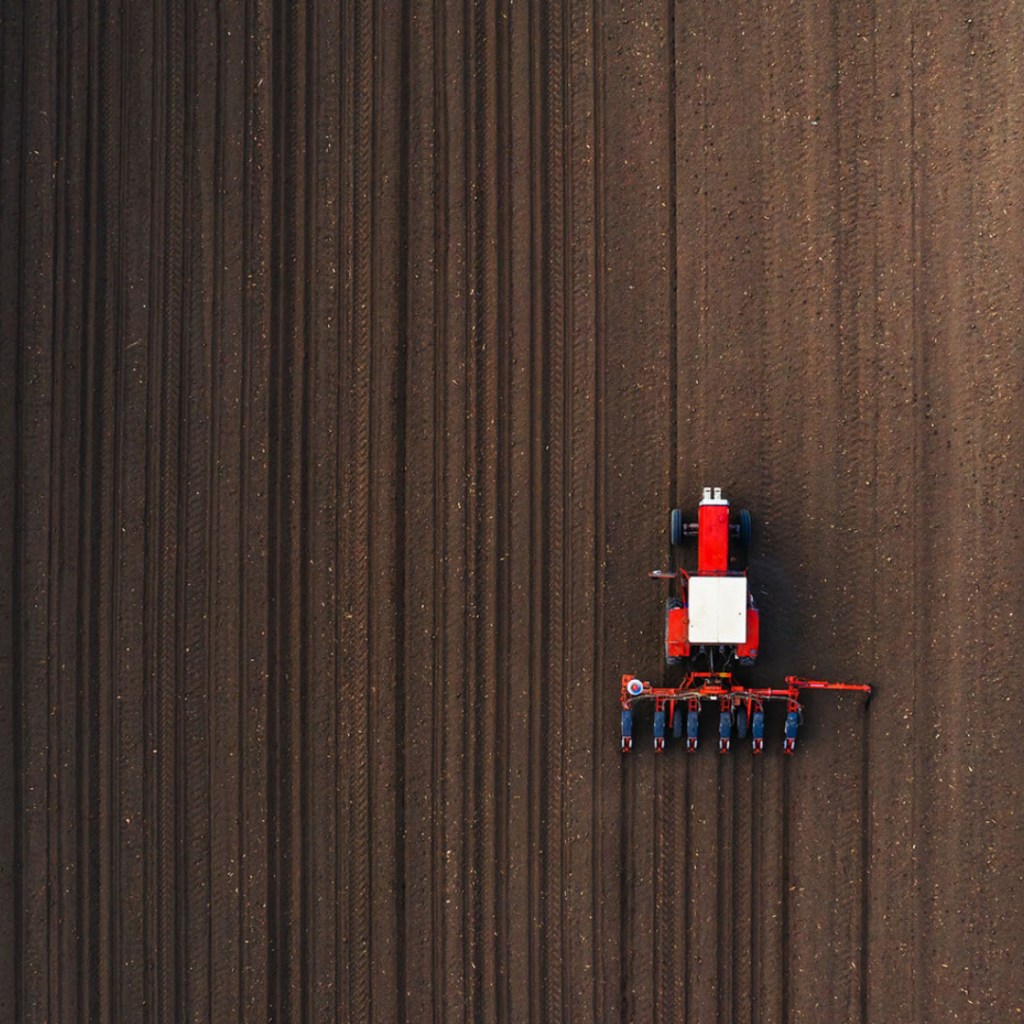
A tractor rumbled to life in the distance and a cloud of dust rose over the line of trees that separated the house from the cropland. Karma sprinted to the bordering trees to investigate with tail swinging in wild and curious circles.

“Sell the land, if you want.” Stella had never thought about inheritance or family legacy, except for mom’s collection of Grateful Dead bootlegs. She’d always believed it was up to her to make their own way in the world. The small scrap of land at the end of the lane that they called the old homestead had never been a part of their history other than warnings to stay away. The house and acre of surrounding land covered in her aunt’s art was what Stella would want should that time come.

“Does Casey want a graduation party?”

“If she wanted one, she would’ve planned it by now.”

From a far corner of the yard Karma barked and howled. These weren’t the playful barks like discovering chickens for the first time, but intentional warning, bordering on viciousness. Stella jogged out to the side yard to see what was upsetting her dog, but as she got closer Karma turned on her. The dog sprinted headlong at Stella. Stella stutter-stepped backward, lost her footing on a tree root, and crashed to the ground. The dog stopped short and snarled at her new owner. What the hell had gotten into the dog? Maybe this was the dog’s trauma response: some deep-seated hatred of tractors borne from experience. Stella rolled over onto all fours and bowed her head to the dog. 

Karma sniffed at Stella’s ear. Stella thought it was affection until the dog took a large bite of hair, and started tugging her back toward the house. Stella screamed as the dog dragged her several yards before letting go. Karma sprinted back to the edge of the cropland and then back. 

Stella held her hand to the side of her head to quell the throbbing. Karma stuck a wet nose in Stella’s face. Stella grabbed the dog’s collar in case this turned into another tugging match, but Karma was content to love on her new mistress.

“What the hell’s gotten into you?” Alice said and swatted at Karma’s rump.

“That was strange,” Stella said.

“As most good deeds are.”

Chapter Fourteen

The air ride seat of the Case tractor bounced and the ride felt no different than riding down the highway in a Cadillac. Wyatt enjoyed the rhythm, bounce, and rattle of the tractor on the rutted road. For the past month, Wyatt has spent forty to sixty hours a week in this cab and knew its rumble and rhythm like a Formula One mechanic might know the pitch and whine of a Ferreri and Billy the head of his pit crew.

The modern family farm was either a break even enterprise or an insurance shell game. Plant the fields, raise the livestock, and pray that the fall provides enough bounty to cover rent or the property taxes on the land, as well as all the creditors. 

The financial end of farming didn’t add up. It took a much smarter man than him. He was driving a $150,000 tractor, pulling a $100,000 planter. The seeds in the hopper were so genetically and chemically advanced they’d left the lab yesterday. This one plot of land was worth at least two million dollars in a bad year, but this year could fetch closer to three million. And that was just one pilot, almost two hundred acres among the four thousand he planted each spring. Last fall, corn was going for over five dollars a bushel compared to leaner years at $1.85 a bushel. The best economist in history wasn’t Milton Friedman or John Maynard Keynes, it was the average American farmer at the mercy of volatile commodity prices with ever increasing cost of production.

Wyatt refused to live a life juggling debt and unable to truly provide for himself or heaven help him a family. If he bought something, he wanted to own it, care for it with pride, and use it until it was past its prime. He dreamed of tending his own acreage, but he couldn’t commit himself to pretending to own something when it all led to debt. The job at Granum provided him the same pride of cultivation and production, but also financial stability. He tended more cropland in Colfax county than any other farmer, collected handsome bi-weekly paychecks, provided for his father’s care during the old man’s twilight years, and saved generously for his own retirement. Pride of labor and financial stability are the basis of a great life in his estimation.

He guided his steed from the gravel lane to the tiny access road and into the fields. The land’s matriarch, Alice, was out in the yard. He wished he could stop and chat, but he had to get moving if he was going to be done before sunset and his date with Casey. He waved to her and stopped the tractor in the field. 

While the tractor idled in the field, he unzipped his coveralls, pulled his arms out of the long sleeves and let the top half hang around his waist. Although the cab had better heat or air conditioning then most cars on the road, he ran hot while planting. It wasn’t exertion that made him sweat, because the GPS and satellite controlled steering did all the work. Anxiety and excitement raised his temperature. He pulled off his Granum seed hat, rested it on the CB radio in the corner and ruffled his sweat-drenched hair.

Wyatt tapped on the tablet mounted in the cab. He flipped through several menus and screens. This plot of land sat adjacent to the river and was prone to flooding late in the summer after germination; therefore, the seed would be planted slightly deeper than normal. The hoppers dropped seeds at the rate of 32,000 seeds per acre, the computer controlled the blades and seed depth. He watched as the twenty-four row planter unfolded with the touch of a few buttons.

While he yearned for an earlier time when farmers were revered and life seemed much simpler, he couldn’t imagine planting without modern technology. Sitting in the cab surrounded by touch screens and dozens of buttons and knobs, he imagined himself at the helm of a spacecraft. He set the speed and hit auto. Without any guidance from him, the tractor pulled forward. Using GPS and satellite navigation, it righted itself in the field and began planting. He throttled up to five miles per hour and checked all his settings after the first two passes.

After covering half the field length on his third pass, he stopped the tractor and hopped out of the cab with a small metal ruler in hand. Wyatt hiked a few strides behind the planter and dug down to find the iridescent green seed nestled in a bed of rich top soil. It looked like an exotic bug cocoon in a pile of black fabric, the most fertile dirt in the world. He dropped the ruler down into the hole. Two and a quarter inches. Perfect seed depth. He pulled off his leather work gloves and picked up the seed. and rolled it between two fingers.. The iridescence rubbed off on his hand. Something in him wanted to pop the seed into his mouth like it was a candy-coated confection, but he resisted the urge. Instead he gave it a sniff, but all he could smell was the nutrient rich soil. 

He tucked the seed into his coverall pocket and clambered back up into the tractor cab, restarted all the systems and let technology take full control. He propped his feet up in the corner, leaned back and watched the field ahead while his mind drifted. He sent the selfie to distract Casey. It was going well, they’d only been dating a few months, but he was hopeful their future wouldn’t end at her graduation in six and a half weeks, not that he was counting.

His phone chimed. He snatched it from the cup holder. Not from Casey as he’d hoped, but the day nurse that cared for his father. No content in the text, just a picture of Dad in his best black Stetson and favorite western shirt. There was no blurring in the photo. The Parkinsons wasn’t bad today. Dad was having a good day. Wyatt’s chest ached with regret and longing to be there. His father, Chance Martin, grew up in west Texas. After school he traded the oil fields for dirt-filled arenas. Bronc riding usually broke a man’s body. It took half a lifetime, but Chance’s rodeo days broke his brain: too many bad falls, too many head injuries, and early onset Parkinsons. 

He dropped the phone back into the cup holder and looked out the enormous windshield to see that he was running out of field. The satellite images and mapping of the field was a week old.  He’d spent the day yesterday running the cultivator through this same field, opening up the soil, redistributing the nutrients, tilling last year’s stalks under. It made planting easier, but it could also cause erosion. If he cultivated a hilly field without planting it right away, all the best top soil would end up in the gully. A small corner of the field and protective berm had dropped away into the drainage ditch. 

Wyatt hollered a few curse words and took over manual control of the Case and turned sharply to the left. He righted the tractor in time, but a few rows of the planter dangled over the drop off. Like a distracted driver that hit the rumble bars on the highway shoulder, he scolded and cursed himself for his carelessness. With the tractor idling and lined up for the next row, he hopped out of the cab again to check everything. The seeder looked no different than this morning. Wyatt peered over the edge of the field and the eroded earth that fell away from the cropland. A small stream coursed along the bottom of the sandy drainage and was now littered with errant seeds. The collapse was a simple matter of geology. It was the place where the silty soil of the river and floodplain met the deep, rich soil. His nerves were too rattled to crawl down to the creek bed to pick up all the seeds. He knew it was against protocol, but he also knew Kevin would never come out into the field to inspect his work.

Overhead was nothing but bright blue sky, but far in the distance along the western horizon was a wall of clouds rising up like a mountain range that varied between deep gray and blinding white. Rain. It was going to rain tonight. If the front was moving fast, it could rain this afternoon. With a new sense of urgency, he hustled back into the cab and hit resume on the tablet screen.

Bad Seed: Chapter Three

Toby pulled off Interstate Eighty and halted the long, slow downhill slide from the Rockies on a long ribbon of concrete cutting a swath through the Midwestern corn and bean fields. While the scenery was pastoral and evocative of a simpler time in America’s short history, he was eager to plant his feet on some solid ground. The exit wasn’t littered with billboards boasting cheap coffee or the state’s oldest saloon, or a replica of an Old West town, instead he was greeted with small signs that ran the length of the flanking cornfield proclaiming Granum Seeds. He’d spent the last week exploring the National Parks of South Dakota while trying to avoid obvious tourist traps, but every truck stop along I-90 and gas station had some gimmick.

He cruised through the quiet streets and turned down the narrow residential road. GPS led his customized Toyota Tacoma to a small brick house with shuttered windows and even a white picket fence. Home. He threw his truck into reverse and parked in front of the Iowa Realty sold sign and left the driveway open so the moving van could back into the driveway in the next hour or two. He pulled a folding camp chair out of the back seat and set up on the lawn with a mug of coffee and a book about Wild Bill Hickok.

He read half a chapter of the Wild Bill biography before he was bored and restless. He dumped the bad coffee on the lawn, the caffeine wasn’t doing him any favors. Toby grabbed a can of beer from the cooler in the bed of the truck, tucked it into a koozie, and sat on the lowered tailgate. He felt no guilt about sipping a beer before most of the world had woken up. The beer in his hand felt and tasted like freedom. He sipped without the worry of tempting an alcoholic wife and without concern about what a nosy neighbor might say. 

“Can’t drink all day if you don’t start in the morning,” he said to himself.

 The thought of moving into this house today was baffling after living out of his truck for months. The moving van was mostly his library of books, a few bookcases, and his closet. No dishes, not a single pot or pan. Not even a bath towel. When he walked away from his marriage and career in Denver, he’d left it all behind. 

He took full responsibility for the demise of his marriage. He and Vanessa married months after his MBA program. She tended to domestic issues while he climbed the corporate ladder at MacGregor Pharmaceuticals. Vanessa was the perfect corporate wife: stunning, independent, and the life of every party, but the higher he climbed – from regional vice president to Chief Operating Officer – the more she drank. The deeper she slid into the bottle, the easier it was to throw himself into his work. 

More than the devil’s water, Vanessa was addicted to the downward spiral into rehab. She reveled in the attention she got the first three months of sobriety. As the adoration faded and the newness rubbed off, she started allowing herself a glass of wine with lunch. She couldn’t face the hard work of sobriety: taking a personal inventory, admitting her shortcomings, making amends, and living the rest of her life with nothing less than rigorous honesty.  After six months, Toby would find half-drunk bottles of lemon flavored vodka hidden in the linen closet. He stood at her side and held her hand through two rehabs. After the third inpatient stint, this time at the Hazelden Clinic in Minnesota, he dropped her off at her mother’s house, turned in his resignation, and traded in his Mercedes for a used Tacoma. He outfitted his every camping need at REI and drove west into the sunset. 

He could finally hear himself, his own voice distinct from the social constructs of husband and head of a Fortune 500 company. That small voice resembled the novels he was reading and took on the tone and timbre of Edward Abbey and Jon Krakuer and Norman Maclean. After a week hanging out with some hardcore climbers in the Bears Ears area of Utah, his voice gained strength and efficiency of language. As fall became winter, he followed the Colorado River south into Arizona. He hiked into the bottom of the Grand Canyon and his voice finally felt his own. They’d finally merged into one consciousness and his anxiousness melted away like warm butter dissolved into flapjacks.

The first time Toby heard the voice was the weekend before Vanessa returned from the Hazelden Betty Ford Clinic. She’d be newly sober, fragile and all amends all the time. The prospect terrified and exhausted him. Toby stood in the Rocky Mountain National Park Alpine Visitor Center taking a break from an impromptu road trip. He held a guide book to the national parks and scrutinized at the map of the national parks of the west. A deep, raspy voice said, You should go.

Toby spun in a circle to see if the man was talking to him, but the shop was vacant aside from an aged volunteer in a fishing vest and a bored ranger examining his nails at a corner desk. Toby shook his head, dismissed the voice with trepidation and leaned closer to peer at the cluster of parks in Utah.

Pack your shit. Let’s go. The voice was clearer and stronger this time.

Toby didn’t spin in a circle this time, but looked over his shoulder. Instead of shaking it off again, he gave the voice a moment’s consideration. He bought an armload of guidebooks and maps to appease the voice. He called in sick on Monday and spent the day pouring over the materials and became more resolved to heed the voice’s edict. 

Once the divorce was settled and he felt solidly in his own skin, he started his job search from his laptop at a truckstop outside Joshua Tree. He was looking for something outside pharmaceuticals and far from his former stomping grounds in the boardrooms of Denver. Mineral Springs seemed to check all the boxes and maybe he could continue to play around with his new photography hobby.

He had the weekend to settle into his new home before work started on Monday. The founder and CEO of Granum was looking to step away from the chief role and focus more on the development side of the business. Although Toby wouldn’t step directly into the big office on his first day, he would take the helm within the year. His soul vacation across the National Parks had been crucial for doing the work on himself that his ex-wife seemed incapable of. While his personal inventory would never be complete, he’d forgiven himself for staying too long in a broken marriage, for enabling Vanessa’s disease, and for abandoning his career in Denver.

He regarded his new house much like a fresh campsite: do the bare minimum to claim the spot, then it was time to explore. He studied his new neighborhood. The real estate listing for this house hadn’t done the neighborhood justice. Ash trees, each with a metal tag tacked into its trunk as part of the town’s fight against the Emerald Ash Borer, flanked the street and ran up the massive hill creating a canopy over the street and framed the row of houses. Most were built during the 1940s during the town’s heyday. The houses ranged from small bungalows to larger craftsman style homes. 

In his posh Cherry Creek neighborhood in Denver he hadn’t know any of his neighbor’s personally, just whatever splashy headline made the front page of the Denver Post about the Broncos tight-end that lived across the street or the triumphs of the energy company Chief Marketing Officer to the west or the messy divorce of the socialite that he shared a back fence with.

In the driveway across the street was one oddity: a rusted out Dodge Caravan with a huge vinyl sticker on the back window advertising Tupperware by Bonnie. Must be hard times in the MLM business, especially when cheap Chinese knock-offs could be delivered to your door in two days courtesy of Amazon. Jesus, he moved in across the street from crazy. A figurine of a duck sipping an umbrella drink hung from the rearview mirror. The weak attempt at whimsy confirmed that Bonnie was certifiable. Hope she isn’t single, because crazy was just his type and he wouldn’t abide any romantic entanglements at this point.

Bad Seed: Chapter One, Part 3

The acrid stench rising from the crack under the door stung her nose while Camila listened to Jonas cough. Even with the tap running, she heard his ragged wheezes.

“I got you, babe,” she called through the door.

Camila ran across the kitchen to the junk drawer beside the back door and dug for Jonas’ rescue inhaler among the myriad of screwdrivers, safety pins, and unidentified keys. She grabbed the inhaler and turned back to the bathroom, but her ankle twisted and she crashed to the floor with a hard smack as all her exposed flesh kissed the polished tile floor. She’d be covered in bruises tomorrow, but that was a battle for another day. She rolled over and kicked off her knock-off Louboutin heels. They weren’t doing her a bit of good if they weren’t pointed to the bedroom ceiling. 

She scrambled to her feet and hobbled to the bathroom door on a swelling ankle. The tap water had stopped the noise replaced by the whistle-rattle of Jonas’ breathing.

“Let me in,” she yelled and rattled the locked door handle. 

The house fell silent. No whistle. No wheeze. Only the thump of Jonas’ body hitting the floor. 

She jiggled the handle again. Nothing. She tucked her shoulder and threw herself at the door multiple times. Thought she heard cracking, but wasn’t sure if it was the door frame or the boning of the corset hitting the thin door.

“Fuck!” she screamed as pain exploded out of her shoulder and across her chest.

She stepped back one more time, measured herself, and lunged forward. She planted her foot beside the doorknob and kicked like she was at bootcamp fitness class. There was a loud crack and the door flew open. Chemical fumes billowed out of the tiny room on a cloud of steam. Her lungs filled with the noxious fumes, her mouth watered, and her nose began to gush with mucus.

Jonas lay in a heap, wedged between the toilet and wall. Blood and mucus smeared his face and glowed crimson on his crisp white shirt. Camila dropped to her knees, she couldn’t get any air that didn’t turn into razor blades in her throat and lungs. She grabbed Jonas’ ankle and gave a weak tug that only resulted in him sliding farther behind the toilet and she could no longer see his face through bleary eyes. She needed to gather her strength and catch her breath, then she’d drag him out. Camila buried her face in the small area rug to wipe off the tears and snot and let it filter the air, but as she closed her eyes she gave in to the darkness.

Bad Seed: Chapter One, Part 2

Jonas left the front door open as he sprinted past his wife into the downstairs guest bathroom. He used his elbow to close the bathroom door and keep Camila at bay while he cleaned up his goddamn mess. He’d taken two showers in the lab, but could still feel the chemicals seeping into his hands like dry skin soaks in a fresh slather of lotion. 

The shoebox-sized guest bathroom was wedged in the corner of the kitchen under the stairs to the bedrooms on the second floor. At the tiny sink, Jonas didn’t bother with the pump on the soap bottle, but used his teeth to take off the lid and dumped globs of soap directly onto his hands and chucked the glass bottle in the tiny trash can tucked beside the toilet. Hot tap water steamed up the mirror over the small pedestal sink. Jonas tried the switch for the ventilation fan, but nothing happened. 

“Fuck,” Jonas said and flipped the switch to the off position.

“You okay?” Camila asked from the other side of the thin door.

When they designed this home before moving to Mineral Springs several years ago, they opted for the tankless water heater which provided an endless supply of scalding hot water on demand. As he ran the soap and suds between his two hands he was thankful for his forethought on that one detail.

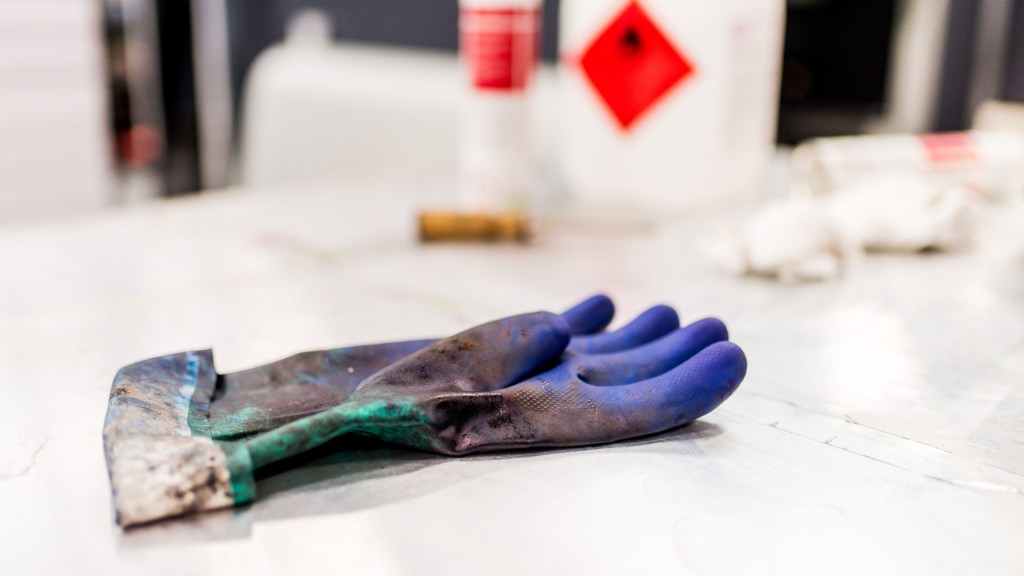
The aroma of lavender and vanilla drifted on the steam. He opened the utility closet and snatched a nail brush off a small hook Camila had stuck to the door. Jonas scrubbed from his nails to his elbows. The thick rubber gloves he wore at work to work with the volatile mix of chemicals in his latest innovation had begun to deteriorate. When he’d finished the painstaking process of varnishing the seeds by hand and pulled the gloves off to start the next step, he noticed a small hole in the heavy rubber between the thumb and forefinger and now all he could see was the iridescence that initially coated his innovation and now coated his hand.

He ripped open the small cabinet over the toilet tank and grabbed the bottle of cleaner closest to him. He spun the sprayer top off and dumped the blue liquid over his hands. The strong ammonia odor stung his eyes and burned his nasal passages like it singed his nose hairs. The steam irritated his lungs. It started as a tickle at the back of his throat and quickly grew into a desperate need to cough. He tried to ignore the panic that gripped his hammering heart. The shimmer on his hands didn’t fade, only glowed a brighter violet.

Camila rapped on the door. “Baby?”

He couldn’t touch his wife with this shit on his skin. “I’ll be out in a minute.” His desperation ratcheted up another level. He used his teeth to open another bottle of cleaner and dumped it over his hands.

Bad Seed: Chapter 1

Camila dipped two manicured fingers under each of her small breasts and lifted them higher in the corset top. In the master bath’s full-length mirror she double checked that her nipples weren’t visible above the hem of the Playboy bunny costume. She leaned forward and shimmied her shoulders and the mounds jiggled like a Victoria Secret model. The corset lifted her pert breasts to new heights. With this bit of magic, she might have to give up her seat on the itty bitty titty committee. If those nitwits on Instagram could hock waist trainers as a weight loss device, she could rock a corset. 

The playboy bunny costume was made for her by a seamstress in Des Moines. While taking the measurements and the fitting was a bit awkward, the body suit was a perfect fit and modeled on the original bunny uniform worn in the 1960s. Hugh Hefner himself would have appreciated the seamtress’ attention to detail.

Her phone chimed from her nightstand. No doubt an automated notification from one of a half dozen apps tracking her fertility and a reminder that it was baby-making day. She adjusted her bunny ear headband and turned to check the fluffy bunny tail stuck to her ass with velcro. Over the past year Camila had tried various other costumes to spice up the sex during their fertile window in hopes her enthusiasm would spread to her ova. As she looked at the full length mirror in her walk-in closet, she knew this time was different. The stockings and heels made her feel nine feet tall and invincible like a superhero. She used two fingers to caress the swell of her white breasts which quickened her breath and sent shivers down her spine.

Even after five years of marriage, their sex life hadn’t suffered. This wasn’t some desperate attempt to rekindle a flame they hadn’t tended. Dr. Benson, the very expensive fertility guy they found in Des Moines, recommended that they only make love during her fertile times rather than fucking like rabbits like they normally would.

At first, the sexual prohibition had been insufferable. They’d bickered and snapped at each other like feuding roommates. That’s when she started playing with costumes to transform their nights of lust into a special event. This change ensured that they looked forward to the nights starred on the kitchen calendar. But into the third and fourth month of the baby making scheme, they’d learned to cope. Jonas had thrown himself into his work at Granum Labs with a special project he wasn’t allowed to talk about, but occupied much of his mind at work and at home. Camila had initially focused her energy on civic duties and volunteering for different beautification committees through city council in their adopted home of Mineral Springs. For a while she tinkered around with different hobbies: knitting, quilting, even taking a few classes in painting at the local art center. Now she spent most of her days deeply engrossed in a book and leading a few book clubs in their adopted town of Mineral Springs. She even called herself a “bookstagrammer.” although she hated that made up word. 

One last look in the mirror, she double-checked her winged eyeliner and false eyelashes before heading downstairs. She wanted to meet him at the door with a cocktail in hand.

At the sideboard in the formal dining room, she poured a double shot of Grey Goose into the cocktail shaker full of ice, added a splash of dry vermouth, replaced the top and gave it a shake. Her now bountiful breasts bounced and jiggled with the motion. God, she loved this. If only her tits looked like this all the time. Maybe after the baby and breastfeeding, she’d invest in some great tits. Although she wanted to keep jiggling her tits, she didn’t want to chip the ice and water down Jonas’ martini. She popped off the top and used the strainer to pour into the chilled glass. Damn. She’d forgotten the olives in the fridge.

Her heels clicked a great rhythm as she strode into the kitchen on the tile floors. As she stood with the fridge door open debating between classic queen olives and the blue cheese stuffed ones, she heard the front door bang open. Jonas was home.

She speared three queen olives onto a toothpick and dunked them into the liquor. She put the tippy martini glass on a small beverage serving tray, lifted it one handed, and clacked across the tile floor to greet her husband in the living room.

What’s in your pocket?

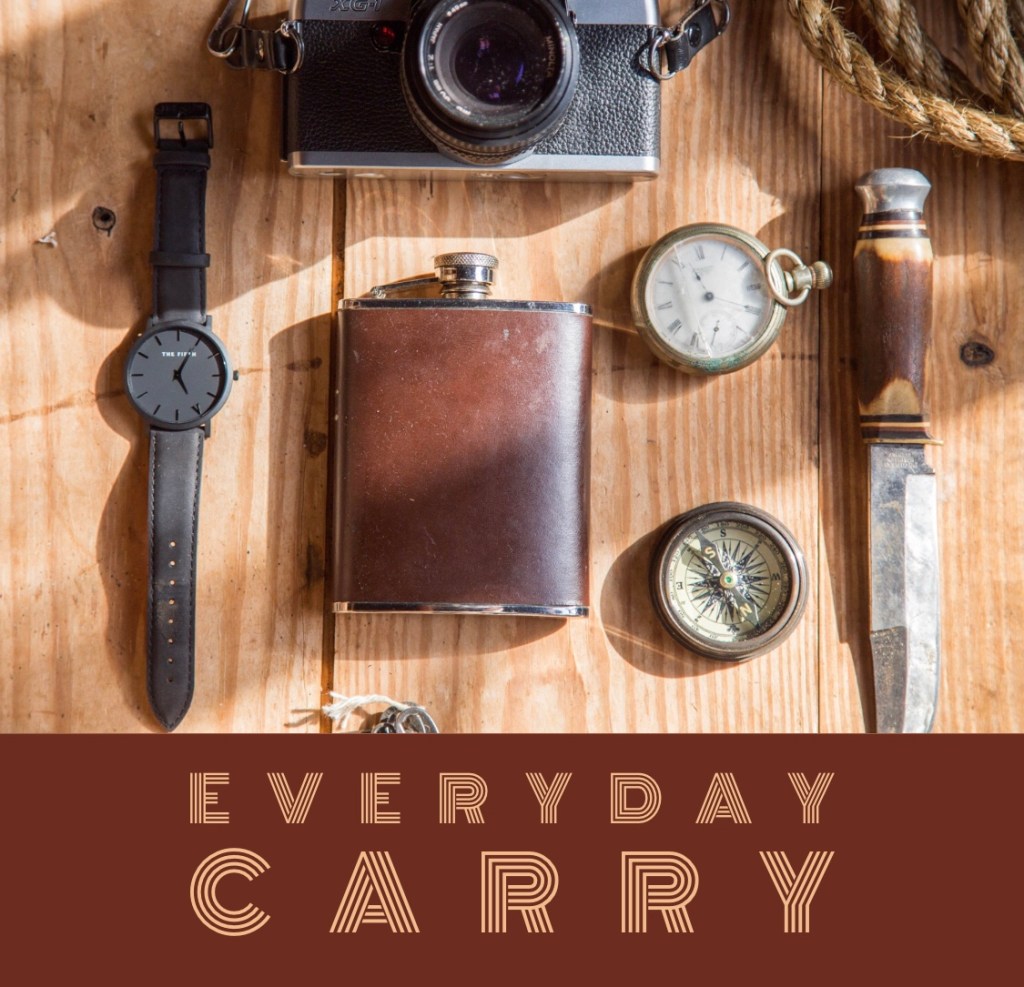
I’ve carried a small Swiss Army Knife on my key chain since I could drive, over two decades. I replace it every few years when it gets dull or too banged up. I think this speaks to my pragmatism.

Ask any man what he carries everyday or what’s in his wallet and you’ll get a story about who he is: sentimental, minimalist, laborer or pack rat.

What does your character carry? How can that inform the reader about who they are? How can those items move the plot forward?

Betty is a worrier that’s been in many car accidents. Her car stocked with a sleeping bag, spare clothes, water, extra wiper fluid and jumper cables. This sets her up for survival when the alien invasion block her way home.

In the Dan Brown books, Robert Langdon wears a Mickey Mouse wristwatch. This informs his whimsical nature and potentially being a neophyte.

What do you carry everyday that informs your character?

Waterfall

As the sun moved ever west, light inched across the wall. One moment the wall was dark the next moment it was lit with dazzling spangles as the sun slanted across the horizon of the San Juan Mountains creating a premature or sunset.

The ice shimmered with brilliant shades of yellow and read and orange like the frozen waterfall was now molten gold tumbling down the mountain to pool in snow. Porter stood and stared in wonderment, while Jo snapped her handheld camera and the tripod camera’s shutter clicked every ten seconds taking a time lapse. The light was so fleeting like the sun sped closer to twilight with its foot firmly on the galactic gas pedal. The light show was over in a matter of ten minutes. The sun dipped below the mountains in a premature sunset.